|
|
|
Yak-3 restoration
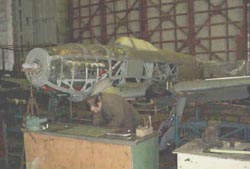
![[YAK-3A at Duxford airfield]](yak3-1_sml.jpg)
YAK-3A at Duxford airfield.
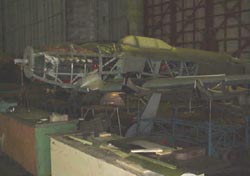
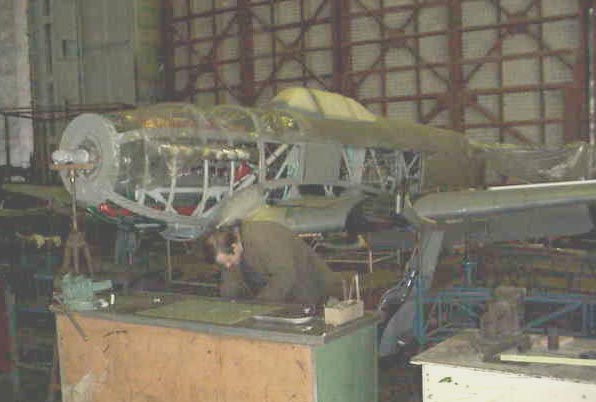
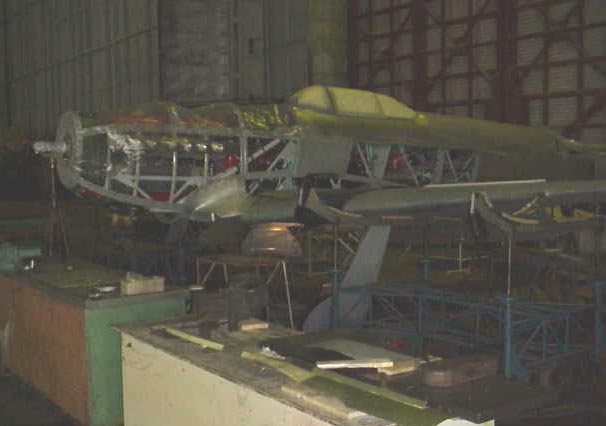
![[YAK-3A in a hangar]](yak3-2_sml.jpg)
YAK-3A in a hangar.
More YAK-3A photos will be avaible soon.
YAK-3A (Modification of Yak-11 trainer by installation of Allison engine)
The Yak-3A is as far as possible a full scale copy of the Yak-3 fighter developed at the Yakovlev Design Bureau during the Second World War. It is intended to use the aircraft as a flying museum exhibit. Aerodynamicaly Yak-3 and Yak-3A are similar, being single engined, single seat cantilever low wing monoplanes with a cantilever tailplane and retractable undercarriage.
The basic structure, control system, undercarriage and some of the equipment were given from Yak-11 wich was a trainer developed from the Yak-3. As the Yak-11 was equipped with an Ash-21 radial engine and tandem cockpit the aircraft was modified to look like the Yak-3 by installing an Allison V-1710-F3R and altering the cockpit structure.
Dimensional Differences
| |
Yak-3A |
Yak-3 |
| Length of aircraft, metres |
8.825 |
8.500 |
| Wingspan, metres |
9.400 |
9.200 |
| Wing area, square metres |
15.4 |
14.85 |
| Tail plane span, metres |
3.600 |
3.400 |
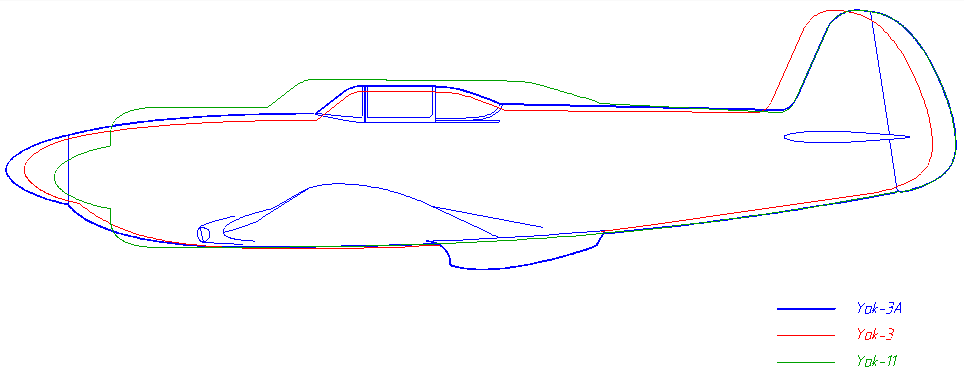
Some flight limitations have been predetermined by TsAGI (Central Aerodynamics Research Institute, Moscow) in 1996:
Manoeuvring with 6 �g� is permissible at speeds not greater than 500 km/h and take-off weight of ~ 2500 kg.
Maximum speed is not greater than 600 km/h.
Load factor at speeds 500 < V < 600 km/h not greater than 4�g�.
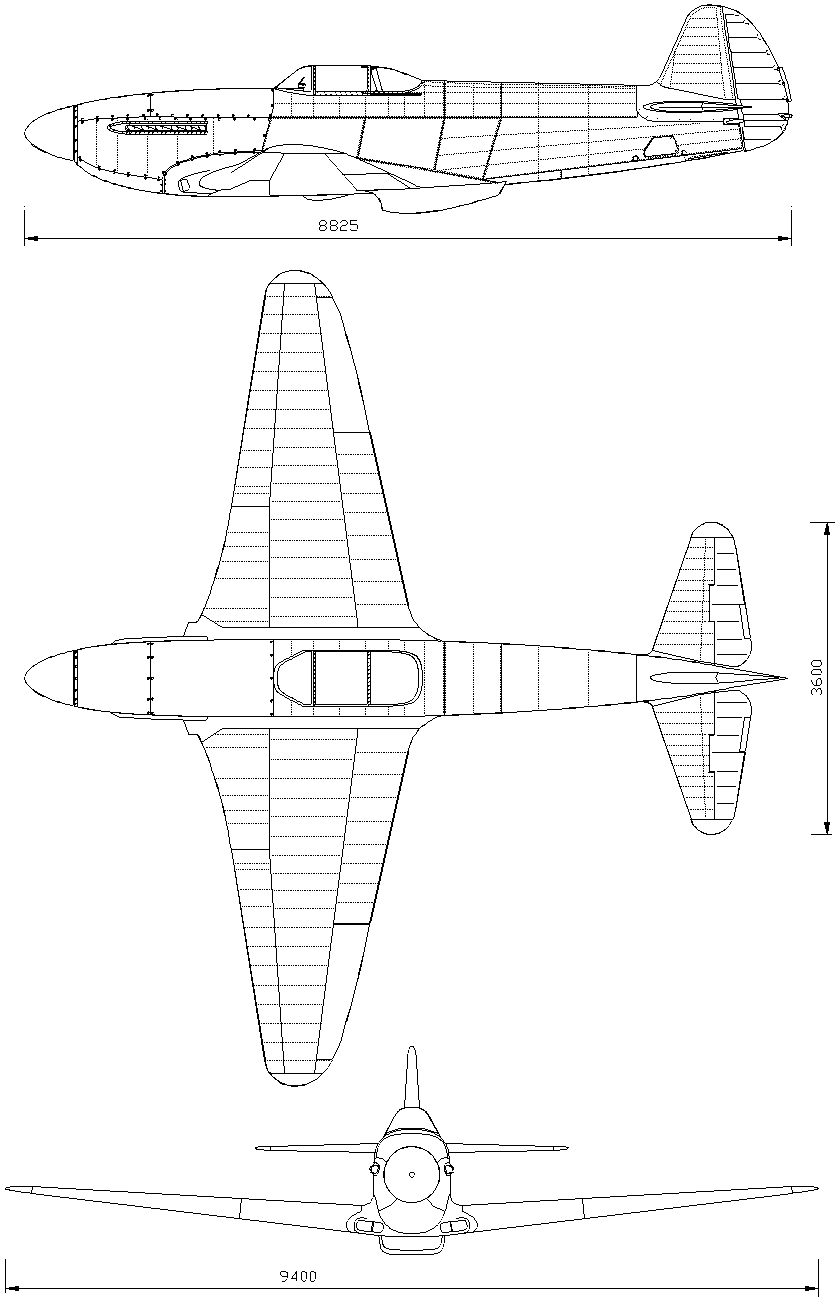
MODIFICATIONS
The following modifications have been carried out on the Yak-11 structure to convert it to Yak-3A (See drawing) :
- Modification of the fuselage framework from Yak-11 to Yak-3A incorporating additional strengthening.
- Modification of the tandem seat cockpit area in fuselage framework for installation of single seat cockpit.
- Installation of retractable tail wheel.
- Design and manufacture of engine mount to fit V1710 engine to Yak-3A.
- Design and installation of stainless steel firewall.
- Installation of V1710 engine including oil and coolant system piping.
- Installation of 33D50 propeller.
- Installation of oil cooler and coolant entry and variable exit ducting.
- Installation of original oil tank.
- Modification and strengthening of main spar at centre section to allow for double ducting in place of Yak-11 single duct.
- Modification of outer wing to accommodate extra fuel tanks as Yak-3.
- Modification of electrical system to use modern generator control components and battery.
Geometric data and dimensions
| Great take off weight |
2500 kg |
| Empty weight |
|
| Crew |
One |
| Fuel capacity volume |
450 litres |
| Overal legth |
8.825 m |
| Wing span |
9.400 m |
| Wing area |
15.400 sq.m |
| Wing aspect ratio |
5.63 |
| Wing taper ratio |
3.33 |
| Mean aerodynamic chord (MAC) |
1.834 m |
| Incidence of wing |
0 degrees |
| Dihedral of wing |
5.93 degrees |
| Ailerons area |
1.06 sq.m |
| Aileron aerodynamic balance area |
0.265 sq.m |
| Aileron deflection angles (up - down) |
-22, +12 degrees |
| Landing flaps area |
1.82 sq.m |
| Range of movement of flaps |
50 degrees |
| Tailplane area |
2.675 sq.m |
| Incidence of tailplane |
0 degree |
| Tailplane arm |
4.792 m |
| Elevator area |
0.986 sq.m |
| Elevator aerodynamic balance area |
0.144 sq.m |
| Deflection of elevator (up - down) |
-25, +20 degrees |
| Elevator trim tab area |
0.045 sq.m |
| Deflection of elevator trim tab |
± 15 degrees |
| Fin area |
1.45 sq.m |
| Fin arm |
4.968 m |
| Rudder area |
0.72 sq.m |
| Rudder aerodynamic balance area |
0.072 sq.m |
| Deflection of rudder |
± 26 degrees |
| Wheel track |
3.420 m |
| Wheel base |
5.453 m |
| Main wheel size |
600 x 180 mm |
| Tail wheel size |
255 x 110 mm |
|
|

![[YAK-3A at Duxford airfield]](yak3-1.jpg)
![[YAK-3A in a hangar]](yak3-2.jpg)